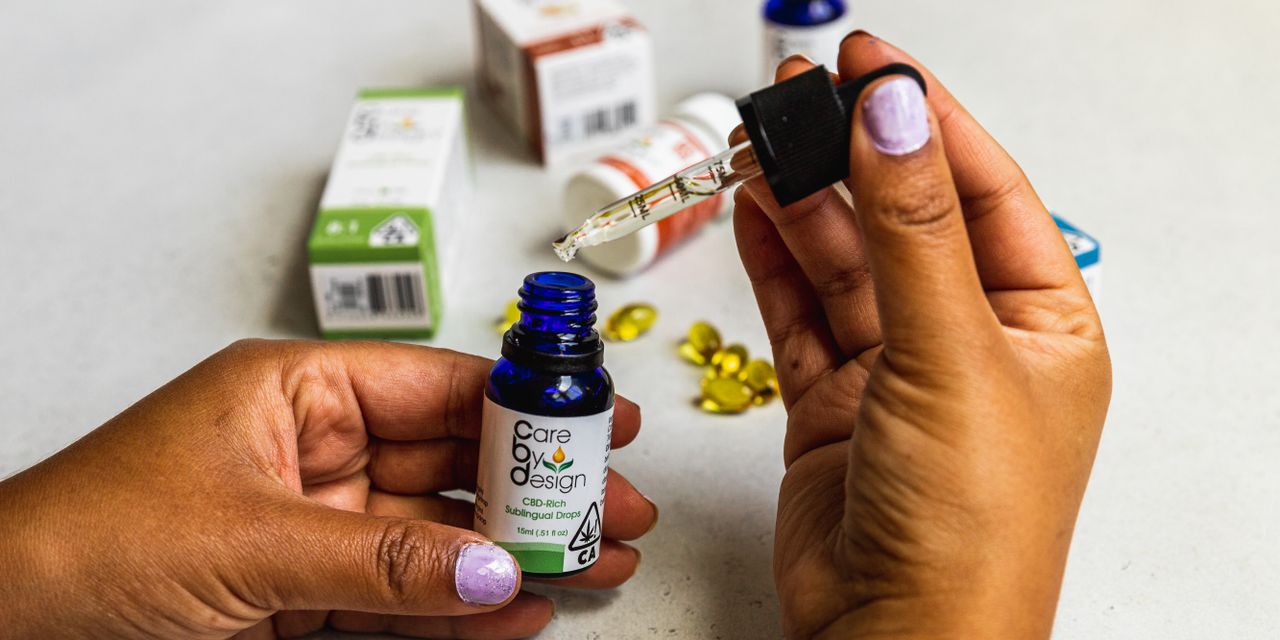
CBD and wellness brands face a distinctive growth challenge. Many customers depend on trust and personal experience when evaluating products, but informal recommendations often go untracked and unrewarded. Building an effective referral program requires reliable attribution, appropriate incentives, fraud controls, and clear rules for endorsements and product claims.
Referral programs can help wellness brands turn satisfied customers into advocates, but performance varies significantly by product, audience, reward structure, and implementation. Brands should avoid relying on universal conversion or customer acquisition cost benchmarks and instead compare referral results with their own paid, organic, email, and repeat-purchase channels.
For CBD products, referral marketing also requires careful compliance. Incentivized participants should disclose their relationship with the brand, and neither the company nor its advocates should make unsubstantiated claims that a product treats anxiety, sleep disorders, pain, or other medical conditions. The FDA has approved only one CBD prescription drug and continues to warn about unsupported therapeutic claims for other CBD products. The FTC also requires clear disclosure of material connections between advertisers and endorsers.
This list is organized by use case rather than as an absolute ranking.
Key Takeaways
- Public software pricing ranges from free entry plans to custom enterprise contracts, with usage limits and add-ons varying by platform.
- Shopify brands should prioritize native ecommerce integrations, checkout compatibility, fraud controls, and connections to their email and SMS stack.
- Brick-and-mortar CBD retailers may benefit from QR codes, referral codes, and name-based offline attribution.
- Subscription and affiliate programs require recurring commission tracking and compatibility with the business’s payment processor.
- Referral results should be evaluated against each brand’s own conversion rate, customer acquisition cost, repeat-purchase rate, and customer lifetime value.
- Referral marketing can reduce dependence on paid advertising, but it does not eliminate disclosure, product-claim, platform-policy, or legal obligations.
1) Rivo: Full-Stack Retention Platform for Shopify
Rivo is a retention platform for Shopify and Shopify Plus merchants. It combines loyalty programs, referrals, paid memberships, and customer accounts in a connected system.
Key Features
- Loyalty, referrals, VIP tiers, paid memberships, and customer accounts
- More than 20 built-in referral fraud-protection tools
- Klaviyo integration for loyalty and referral messaging
- Tiered referral rewards and configurable advocate incentives
- Shopify-native checkout, customer-account, and post-purchase touchpoints
- Developer tools, APIs, webhooks, and integrations for custom implementations
Rivo’s current public pricing starts at $49 per month for Scale. Plus is listed at $499 per month, while Enterprise uses custom pricing. The pricing page identifies month-to-month billing and different order-volume, feature, integration, and support allowances across plans. Merchants should confirm current order limits and any product-specific pricing before purchasing.
Rivo’s official OSEA Malibu case study reports a 77% repeat-purchase rate among customers who redeemed loyalty rewards. Those customers placed 5.5 times more orders than non-members and had an average order value of $167. These are results from a defined customer segment within one brand, not guaranteed outcomes for other wellness merchants.
Rivo also reports that brands have generated more than $1.5 billion through its platform. Because this is a company-reported aggregate, it should be treated as a vendor performance statement rather than an independently audited industry benchmark.
For CBD brands that use Shopify, Rivo’s referral features can help reduce dependence on paid acquisition while connecting advocacy with loyalty, VIP, and customer-account experiences. Brands remain responsible for referral terms, reward disclosures, applicable CBD rules, and the claims made by participating customers or ambassadors.
2) ReferralHero: Online and Offline Referral Tracking
ReferralHero focuses on referral tracking across digital and offline customer journeys. This can be useful for CBD stores, wellness clinics, and other businesses where recommendations may occur in person rather than through a trackable online link.
Key Features
- Online and offline referral attribution
- QR codes for printed materials and physical locations
- Name-based attribution for referrals that do not use a link
- Referral landing pages, codes, and campaign automation
- API and webhook access
- Fraud-prevention and referral-validation controls
ReferralHero currently lists a free option for small programs, Pro at $199 per month for up to 10,000 members, and Premium at $399 per month for up to 50,000 members. Enterprise pricing is customized. Promotional and annual-billing prices may differ, so merchants should verify the final amount and member allowance directly.
ReferralHero advertises assisted campaign building within 48 hours. This should be treated as a service offer rather than a guaranteed implementation timeline for every integration.
The company’s Bernard Cannabis Center case materials report more than 10 patient referrals per month. Because this is a vendor-published customer result, brands should use it as an implementation example rather than as a guaranteed CBD benchmark.
ReferralHero is particularly relevant when referral attribution must connect digital campaigns with front-desk, retail, event, or clinic interactions. Its name-based and QR-code options can capture recommendations that a link-only system may miss.
3) Referral Factory: No-Code Referral Campaign Builder
Referral Factory provides a visual campaign builder, referral links and codes, reward configuration, and integrations for brands that want to launch referral journeys without creating the entire system from scratch.
Key Features
- Visual referral landing-page and campaign builder
- Unique referral links and codes
- Double-sided and configurable rewards
- Conversion-event qualification
- Fraud alerts and campaign controls
- HubSpot and other integration options
Referral Factory’s current public pricing lists Starter at $95 per month, Basic at $200 per month, Pro at $400 per month, and Enterprise from $1,000 per month. Participant allowances, campaign limits, integrations, support, and trial eligibility differ by plan. Annual billing is advertised with a discount.
There is no universal referral reward amount that works across wellness categories. Brands should calculate a sustainable incentive using gross margin, average order value, expected repeat purchases, return rates, and the cost of rewards given to both the advocate and referred customer.
Double-sided rewards can create a more balanced referral experience because both participants receive a benefit. Referral qualification can also be tied to a completed purchase or another defined event rather than rewarding every unverified signup.
4) GrowSurf: API-Friendly Referral Infrastructure
GrowSurf provides referral infrastructure for businesses that want developer access, CRM integrations, and configurable reward logic.
Key Features
- REST API, webhooks, and JavaScript tools
- Stripe, HubSpot, and Salesforce integrations
- Configurable and dynamic rewards
- Fraud-detection controls
- Developer options for web and mobile implementations
- Participant and campaign analytics
GrowSurf currently advertises Startup pricing from $125 per month when billed annually and Business pricing from $314 per month when billed annually. Larger programs use custom pricing. Pricing scales according to participant volume, and a 14-day trial is listed for eligible plans.
GrowSurf markets to several industries, including healthtech, but brands should not treat vendor-published category examples as universal wellness benchmarks. Participation, conversion, and acquisition costs depend on the quality of the offer, referral audience, product-market fit, tracking window, and qualification rules.
The platform may suit brands that need to connect referrals with a CRM, payment system, custom application, or internally developed customer journey. Less technical teams should account for the implementation work required to configure those systems correctly.
5) JeriCommerce: Wallet-Based Loyalty and Referrals
JeriCommerce combines loyalty and referral features with Apple and Google Wallet passes. This approach can make a customer’s points, referral information, and rewards accessible from a mobile wallet without requiring a separate branded mobile app.
Key Features
- Apple and Google Wallet passes
- Referral links or codes displayed through the wallet experience
- Configurable points and referral rewards
- Double-sided reward options
- Automated referral tracking
- Mobile sharing without a separate proprietary app
JeriCommerce currently lists a free plan, Growth at €45 per month, and Advanced at €145 per month. The referral program is listed as a €15 monthly add-on for Growth, while Enterprise pricing is customized. Free, Growth, and Advanced are described as month-to-month plans.
The wallet pass can reduce the number of steps required to locate or share a referral code. Actual adoption still depends on how clearly the brand promotes wallet enrollment and how useful customers find the pass after installation.
Brands should set points and reward values based on their own economics rather than copying a fixed template. A reward that works for a high-margin supplement subscription may be unsustainable for a low-margin single-purchase product.
6) Rewardful: Recurring Affiliate Commission Tracking
Rewardful is an affiliate and referral platform designed primarily for businesses that process payments through Stripe or Paddle. It can be relevant to subscription and digital wellness businesses, but it is not a Shopify-native referral platform.
Key Features
- Recurring commission tracking
- Stripe and Paddle support
- Affiliate links and coupon-code attribution
- Configurable commission structures
- PayPal and Wise payout workflows
- Affiliate dashboards and campaign analytics
Rewardful currently lists Starter at $49 per month, Growth at $99 per month, and Enterprise from $149 per month, with a 14-day trial. Revenue allowances, campaign limits, support, and payout features vary by plan.
Rewardful’s official Constance case study reports that the holistic wellness platform grew from 20 to 60 affiliates within two months of switching. This is a specific customer result and should not be interpreted as a general growth expectation.
Recurring commission structures can align an advocate’s incentive with continuing subscription revenue. Merchants should confirm that Rewardful supports their payment and subscription stack before selecting it, especially when their core storefront and checkout operate through Shopify.
7) Glue Loyalty: Local-Business Loyalty With CBD Guidance
Glue Loyalty is a general loyalty platform for local and small businesses. The company has published guidance for CBD retailers, but the underlying platform is not exclusively designed for cannabis or CBD companies.
Key Features
- Branded loyalty application
- Points and tiered loyalty programs
- Personalized offers and customer segmentation
- Referral functionality
- Membership and multi-pass features
- Point-of-sale options on selected plans
Glue currently offers a free plan. Its public monthly prices are listed at $35 for Growth, $159 for Auto Club, and $199 for Auto Club with POS, with lower effective monthly prices available through annual billing. Some higher plans also carry a setup or physical-kit charge.
Glue states that referrals, subscriptions, and multi-passes become available through the native app after it has been submitted to the relevant app stores. CBD retailers should account for this requirement when comparing Glue with web-first referral tools.
The platform may be relevant for local retailers that want loyalty, memberships, promotions, and referrals in a branded mobile experience. Merchants should separately review payment, product, marketing, and consumer-protection requirements applicable to CBD in every jurisdiction where they operate.
8) Gatsby: Wellness Ambassador and UGC Programs
Gatsby focuses on ambassador, social engagement, and user-generated content workflows. Its official wellness materials identify Highline Wellness as a customer.
Key Features
- Tracking of tagged Instagram Stories, Posts, and Reels
- Support for selected Instagram comments and direct-message interactions
- Shopify referral-code generation
- Klaviyo flows for ambassador communication
- Connections with loyalty platforms
- TikTok functionality available under separately scoped features or add-ons
Gatsby currently lists Starter at $229 per month on month-to-month billing or $199 per month when billed annually. Standard is listed at $579 per month month-to-month or $499 per month with annual billing. Enterprise pricing is customized, and Gatsby advertises a 30-day trial.
Gatsby should not be described as tracking every social mention on every network. Its strongest documented functionality centers on supported Instagram activities, with TikTok subject to separate collection, profile, and plan requirements.
Ambassador programs can help brands collect and organize customer-created content, but incentivized participants must disclose their relationship with the brand. Brands should also review ambassador posts for unsupported medical or therapeutic claims.
A 2017 JAMA study examined 84 CBD products purchased online in 2016 and found that only 30.95% were accurately labeled for CBD content. The dated and limited sample should not be treated as a current market estimate, but it illustrates why CBD brands need accurate labeling, careful substantiation, and responsible customer communication rather than relying solely on testimonials.
9) Nordic Oil Affiliate Structure: A Brand Program Example
Nordic Oil is not referral software. Its affiliate program is included here as an example of how one CBD brand structures commissions and promotional support.
Key Benchmarks
- Commissions of up to 35%
- An in-house affiliate tracking platform
- CBD-specific promotional materials
- Personalized vouchers for supported markets
- Account-management and payout processes
Nordic Oil’s official affiliate page currently advertises commissions of up to 35%, replacing the previously cited 30% maximum.
A high commission percentage does not automatically make a program profitable. Brands need to consider gross margin, repeat purchases, refunds, regional restrictions, coupon use, attribution windows, and the risk that an affiliate’s messaging creates regulatory exposure.
The FDA states that only one prescription CBD drug has been approved and warns companies against marketing unapproved CBD products with claims that they prevent, diagnose, treat, or cure diseases. Affiliate terms should therefore include clear claim restrictions, disclosure requirements, monitoring procedures, and consequences for noncompliant promotions.
Benefits of Referral Programs for Wellness Brands
Referral programs can help wellness companies build customer advocacy, but the commercial effect depends on program design and customer behavior.
Potentially More Efficient Customer Acquisition
Referral incentives are generally paid after a defined action, such as a qualified signup or completed purchase. This can make costs easier to connect with actual outcomes than impression-based advertising.
The complete acquisition cost should still include software, discounts, free products, commissions, fraud, returns, administrative work, and rewards issued to both sides of the referral. Brands should compare that total with their paid, affiliate, influencer, email, and organic acquisition costs.
Additional Customer and Referral Value
Some referral research has found that referred customers may generate more subsequent referrals than other customers. A recent Journal of Marketing Research analysis summarized by the American Marketing Association found higher downstream referral activity across several field datasets, although the size and commercial value varied by setting.
This does not establish a universal lifetime-value increase for CBD or wellness brands. Each merchant should compare referred and non-referred cohorts using consistent acquisition dates, contribution margin, refunds, repeat purchases, and observation periods.
Reduced Dependence on Paid Advertising
CBD advertising policies can be restrictive and differ by platform, product format, certification, and location. Google currently permits certain topical hemp-derived CBD advertising under limited conditions rather than prohibiting all CBD advertising.
Referral programs can reduce reliance on these channels, but they are not compliance-free. Program operators remain responsible for applicable laws, platform rules, incentive disclosures, privacy obligations, and product claims made by customers, affiliates, or ambassadors.
Customer-Generated Social Proof
Recommendations from existing customers can provide useful context for prospective buyers. The most credible referral programs encourage customers to describe genuine product experiences without scripting unsupported outcomes.
When advocates receive points, discounts, products, commissions, or other benefits, they should clearly disclose that relationship. Brands should monitor referral and ambassador content and remove claims that cannot be substantiated.
Best Practices for Wellness Referral Programs
Building an effective program requires more than selecting a reward amount.
Choose Sustainable Rewards
Product credits, free products, discounts, points, or commissions can all work, but the correct choice depends on the brand’s economics and customer behavior.
Model the expected cost using average order value, gross margin, redemption rate, repeat purchases, returns, and fraud. Start conservatively, then test whether a higher reward generates enough incremental qualified customers to justify the added cost.
Time Referral Requests Strategically
Referral prompts are often more relevant after a customer has had an opportunity to receive and evaluate the product, after a repeat purchase, or following a positive service interaction.
For CBD products, avoid prompting customers to make therapeutic claims about sleep, anxiety, pain, or disease. Ask them to share neutral information about their shopping experience, product preferences, customer service, or how the product fits into their routine.
Build Trust Through Transparency
Double-sided rewards can make the value exchange clear because both the advocate and the referred customer benefit. Program terms should explain qualification rules, reward timing, exclusions, expiration, returns, and fraud review.
Advocates should also be told when and how to disclose incentives. A simple disclosure should be clear, prominent, and placed with the endorsement rather than hidden on a profile or separate terms page.
Implement Strong Fraud Prevention
Referral programs can attract self-referrals, duplicate accounts, coupon leakage, fabricated orders, and coordinated abuse. Useful controls include IP monitoring, self-referral detection, new-customer validation, minimum-order thresholds, delayed reward approval, and order-fulfillment checks.
Fraud rules should be proportionate and clearly disclosed. Brands should also provide a review process for legitimate customers whose rewards are incorrectly blocked.
Choosing the Right Referral Platform for Your CBD Brand
CBD and wellness brands should begin with their actual sales model rather than a headline conversion benchmark.
For Shopify brands seeking loyalty, referrals, paid memberships, and customer accounts in one environment, Rivo provides a connected retention platform with public plans starting at $49 per month. Its referral offering includes configurable rewards, Shopify touchpoints, integrations, and more than 20 built-in fraud controls.
Retail-heavy businesses may place greater value on ReferralHero’s QR codes and offline attribution. Brands wanting a visual no-code builder may consider Referral Factory. Developer-led companies may prefer GrowSurf. JeriCommerce is differentiated by Apple and Google Wallet passes, while Gatsby focuses on ambassador and social-engagement workflows. Rewardful is most relevant when recurring affiliate commissions and Stripe or Paddle payments are central to the business.
Glue may fit local businesses that want loyalty and referrals through a branded native application, but merchants need to account for its app-launch requirements. Nordic Oil’s affiliate program can provide structural inspiration, although it is not software that another brand can install.
The right platform is the one that fits the brand’s storefront, payment system, customer journey, reward economics, compliance process, and reporting needs. Results should be assessed using the company’s own qualified referral rate, contribution margin, repeat-purchase rate, fraud rate, and customer lifetime value.
Frequently Asked Questions
What makes referral programs effective for CBD brands specifically?
CBD advertising access can be restricted by platform policies, product format, certification requirements, and location. A referral program can reduce dependence on paid media by encouraging existing customers to share the brand directly. It does not bypass applicable laws or platform rules, and participating customers must disclose incentives and avoid unsupported health claims.
How much should wellness brands offer as referral rewards?
There is no reliable universal range. Brands should calculate a reward from their average order value, gross margin, repeat-purchase rate, expected redemption, refund rate, and fraud risk. A double-sided reward can benefit both participants, but the combined cost must remain lower than the contribution margin expected from the referred customer.
What referral conversion rates should wellness brands expect?
No independent benchmark supports a universal conversion rate for CBD and wellness referral programs. Conversion depends on the offer, audience, attribution window, product price, customer experience, qualification rules, and traffic source. Brands should establish a baseline from their own program and compare referral cohorts with equivalent paid, organic, and email cohorts.
Should CBD brands use loyalty and referrals together?
Combining loyalty and referrals can create multiple reasons for customers to engage. Customers may earn points for purchases while receiving separate rewards for qualified referrals, and VIP tiers can recognize higher-value members. Platforms such as Rivo connect these features within one Shopify-focused system, although brands should keep earning rules and program terms easy to understand.
How important is fraud prevention for wellness referral programs?
Fraud prevention is important because self-referrals, duplicate identities, fabricated orders, coupon leakage, and coordinated abuse can consume the program budget. Useful safeguards include IP monitoring, new-customer verification, self-referral blocking, minimum-order requirements, delayed approval, and fulfillment checks. Merchants should balance automated controls with a fair review process for legitimate referrals.